Key Takeaways
- Ghettos and slums are both spatially-defined urban areas but differ significantly in origin, demographics, and social implications.
- Ghettos are typically formed through forced or informal segregation of specific ethnic or cultural groups, while slums arise mainly from economic hardship and inadequate urban infrastructure.
- Social mobility and integration opportunities are often more restricted in ghettos due to enduring social and physical boundaries.
- Slums can be highly heterogeneous in their population and may serve as points of entry for migrants, unlike ghettos which are usually more homogenous in community makeup.
- Approaches to urban policy and intervention differ between ghettos and slums, with each requiring tailored strategies addressing their unique challenges.
What is Ghetto?

A ghetto is a defined urban area where a specific ethnic, religious, or cultural group is concentrated, often as a result of social, legal, or economic pressures. The term has historically been associated with the enforced segregation of marginalized communities.
Origins and Historical Context
The concept of the ghetto originated in 16th-century Venice, where Jewish residents were compelled to live in a separate district. Over the centuries, the term expanded to describe neighborhoods where minority groups were isolated from the broader population.
Ghettos have been present in various countries, such as the Jewish ghettos during World War II or African American neighborhoods in 20th-century United States cities. These areas were often products of deliberate policies or discriminatory practices rather than organic settlement.
Legal mechanisms, such as redlining or restrictive covenants, have played major roles in the creation of many ghettos. These instruments not only dictated where certain groups could live but also influenced access to resources and services.
Even after such formal policies ended, the legacy of segregation often persisted through informal social and economic barriers. As a result, ghettos have sometimes remained insular for generations.
Demographic Composition and Identity
Ghettos are distinguished by a predominance of one ethnic or cultural group, often resulting in a strong sense of shared identity. This concentration can foster unique cultural expressions, languages, and community traditions.
In cities like Chicago or New York, African American and Latino ghettos have developed vibrant music, cuisine, and art scenes. These cultural outputs frequently become influential well beyond their original boundaries.
Despite the richness of community life, ghettos may also experience social isolation from the larger urban fabric. Persistent stereotyping and negative perceptions can reinforce this sense of separation.
Residents may experience both protective solidarity and limiting exclusion due to strong internal social networks and limited external interactions. The internal cohesion helps sustain the community but often restricts broader integration.
Urban Structure and Physical Boundaries
Ghettos are often demarcated by visible or invisible barriers, such as railway lines, highways, or artificial borders. These boundaries reinforce the separation from surrounding neighborhoods or cities.
Architectural styles and housing densities can be distinctive, sometimes reflecting historic neglect or deliberate containment. The urban landscape may include public housing projects or older, subdivided homes adapted to high occupancy.
Public amenities such as parks, schools, or clinics may be underfunded or absent, reflecting the area’s marginalized status. Infrastructure often lags behind that of adjacent neighborhoods, further entrenching disparities.
Over time, some ghettos undergo urban renewal or gentrification, which may either revitalize or displace existing communities. The process can change the physical and social character of the neighborhood irreversibly.
Socioeconomic Realities and Mobility
Ghettos frequently exhibit higher rates of poverty, unemployment, and underemployment compared to city averages. Economic opportunities are often limited by both internal and external constraints.
Educational institutions within ghettos may suffer from chronic underfunding and overcrowding, which restricts upward mobility for residents. Access to quality healthcare and social services can also be compromised.
Crime rates may be elevated, often resulting from a combination of social marginalization and lack of opportunity. Law enforcement presence can be either insufficient or excessively punitive, exacerbating tensions.
Despite these challenges, ghettos are also sites of resilience and grassroots organization, where residents advocate for better conditions and greater inclusion. Community activism has played a crucial role in improving life for many ghetto inhabitants.
What is Slum?
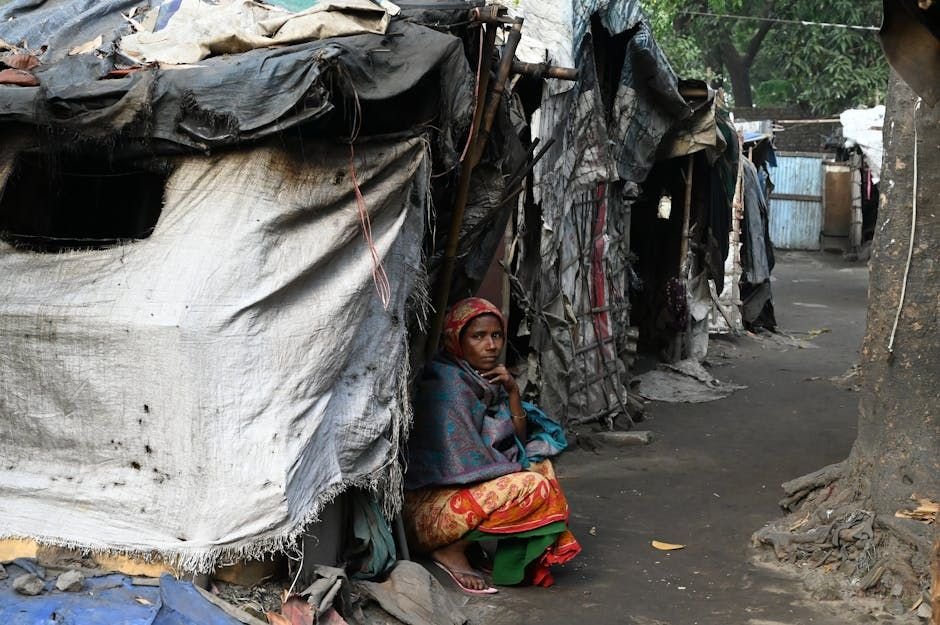
A slum is an urban area characterized by substandard housing, overcrowding, and inadequate access to basic services. Unlike ghettos, slums are not defined by the ethnicity or cultural identity of their residents, but by acute economic deprivation and poor living conditions.
Development and Urban Expansion
Slums often emerge in rapidly growing cities where formal housing cannot keep pace with population influx. Migrants from rural areas and other countries may settle in informal settlements due to affordability and lack of alternatives.
Unplanned urbanization is a key driver, as seen in cities like Mumbai, Lagos, and Rio de Janeiro. The absence of urban planning frequently leads to physical layouts that lack proper roads, drainage, or access to utilities.
Local governments may struggle to regulate or improve these areas, given their spontaneous and unauthorized nature. As a result, slums can persist for decades, expanding both horizontally and vertically.
Efforts to formalize or redevelop slums often meet with resistance from residents who fear displacement and loss of livelihood. Community participation is critical for any sustainable intervention to succeed.
Demographics and Social Fabric
Slums are typically diverse, drawing residents from multiple backgrounds, languages, and cultures. The lack of homogeneity distinguishes slums from ghettos, where a single group tends to dominate.
Migration patterns influence the fluidity of slum populations, with people moving in search of jobs or escaping rural poverty. This constant flux shapes the area’s social dynamics and informal economies.
Social networks form around shared needs rather than shared identity, enabling cooperation among residents with different origins. These networks help mitigate some of the hardships associated with slum life.
Despite challenging conditions, slums can serve as entry points into urban society, providing affordable housing to new arrivals who gradually integrate into the city.
Living Conditions and Infrastructure
Housing in slums is often makeshift, ranging from shacks built with salvaged materials to densely packed tenements. Overcrowding is common, with multiple families sharing limited space.
Access to clean water, sanitation, and electricity is typically unreliable or nonexistent. Residents may rely on communal taps, improvised toilets, or illegal utility connections.
The risk of disease outbreaks is heightened by poor sanitation and inadequate healthcare facilities. Environmental hazards, such as flooding or fires, pose constant threats due to the fragile infrastructure.
Despite these hardships, residents often devise innovative solutions to everyday challenges, such as cooperative savings schemes or informal schools. Self-organization is a hallmark of slum communities.
Economic Activity and Resilience
The informal economy is the lifeblood of most slums, supporting livelihoods through street vending, small-scale manufacturing, and service provision. Formal employment opportunities are rare due to limited education and social exclusion.
Entrepreneurship thrives despite the absence of legal recognition or regulatory support. Many slum dwellers operate microbusinesses that cater to community needs, from food stalls to tailoring shops.
External shocks, such as economic downturns or pandemics, disproportionately affect slum residents because of their precarious employment. Recovery efforts are often led by local associations or non-governmental organizations.
Community-based resilience enables slums to adapt to adversity, but without systemic intervention, significant improvements in living standards remain elusive.
Comparison Table
The following table outlines distinct parameters highlighting the geopolitical and social differences between ghettos and slums:
| Parameter of Comparison | Ghetto | Slum |
|---|---|---|
| Primary Formation Factor | Group-based |